The Lowell Cemetery is a non-municipal and non-denominational cemetery.
77 Knapp Ave, Lowell, MA 01852 | 978-454-5191
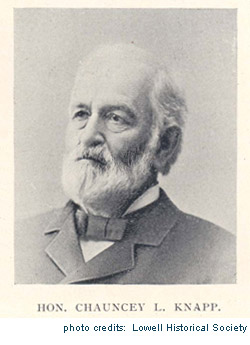
In 1843, Chauncey Knapp moved to Lowell, Massachusetts, became editor of the Middlesex Standard [Liberty Party newspaper], and later became editor of the Lowell Citizen and News. His interest in politics continued, and Knapp became Clerk of the Massachusetts State Senate in 1851.
In 1854, Chauncey Knapp ran as an anti-slavery Free Soiler and was elected overwhelmingly to Congress as a member of the American Party (the only major party with an anti-slavery plank) to the Thirty-fourth Congress. Shortly after, the Republican Party (the party of Abraham Lincoln) was formed with an anti-slavery plank.
Knapp left the American Party, joined the Republican Party, and was again overwhelmingly elected to the Thirty-fifth Congress, 1855-1859. During the heated slavery debates in Congress, Senator Charles Sumner of Massachusetts was severely beaten by Congressmen Prescott Brooks of South Carolina on May 22, 1856. In response, Congressman Knapp delivered a speech on the floor of the House that was absolutely stunning.
In 1859, Knapp left Congress and became editor of the Lowell Daily Citizen from 1859 to 1882. He is buried in the Lowell Cemetery. Knapp Avenue, leading from Rogers Street into the Lowell Cemetery, is named for Congressman Chauncey L. Knapp.